
How AI Is Changing Marketing in 2026 - And What Calgary Businesses Should Do About It

A year ago, most business owners in Calgary were still treating AI like a curiosity. Something tech companies talked about at conferences. That window closed fast. In 2026, artificial intelligence isn't a future trend in marketing — it's the operating system that the most competitive businesses are already running on. And the gap between companies that use it well and those that ignore it is widening every month.
This isn't a breathless hype piece about robots replacing marketers. The reality is more nuanced. AI is changing specific parts of the marketing workflow in ways that save real time and produce measurably better results. It's also creating new risks for companies that adopt it carelessly.
Here's what's actually happening, what it means for Calgary businesses, and how to use AI as a competitive advantage without losing what makes your brand human.
AI Has Fundamentally Changed How Content Gets Made
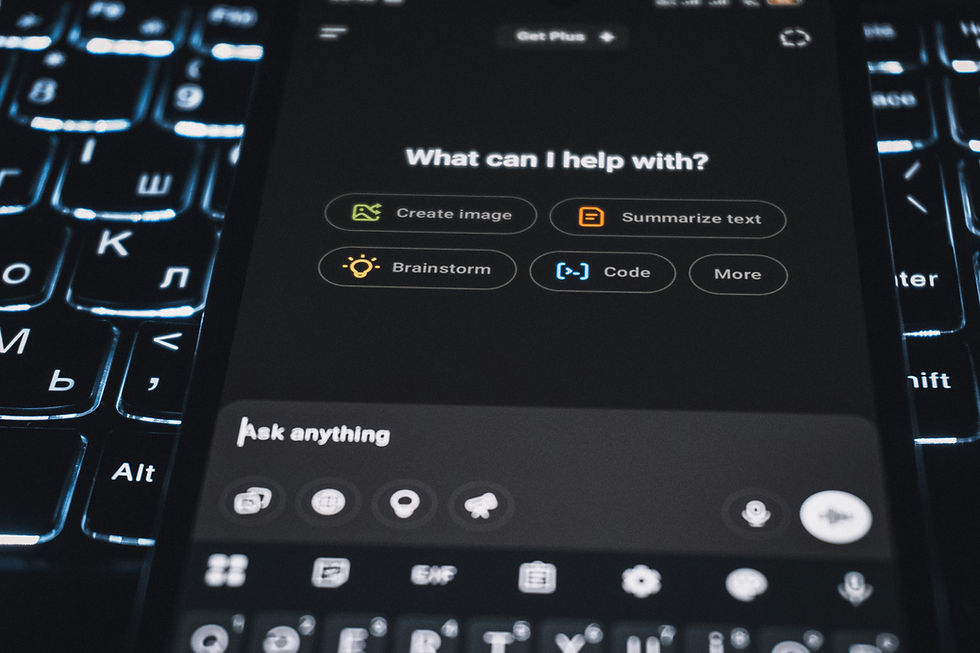
The most visible impact of AI in marketing is in content creation. Tools like ChatGPT, Claude, Jasper, and dozens of others can now produce blog posts, ad copy, email sequences, product descriptions, and social media captions in minutes. For businesses that used to spend weeks waiting on a single round of blog content, that speed is transformative.
But speed without strategy is just fast noise. The businesses getting real value from AI content tools aren't the ones hitting "generate" and publishing whatever comes out. They're using AI to produce rough drafts, brainstorm angles, and handle repetitive tasks — then layering in human expertise, brand voice, and local relevance. A Calgary restaurant doesn't need generic AI copy about "delicious food." It needs content that understands the Kensington lunch crowd, references the Stampede rush, and sounds like it was written by someone who actually lives here.
That's why professional content creation still matters enormously — arguably more than before. The bar for content quality is rising precisely because AI has made mediocre content so easy to produce. Standing out now requires the strategic thinking, local knowledge, and creative instinct that humans bring to the table.
Search Engine Optimization Is Being Rewritten by AI - On Both Sides
Google's search results page in 2026 looks nothing like it did two years ago. AI Overviews (formerly called Search Generative Experience) now appear at the top of many queries, pulling synthesized answers from across the web and presenting them before any traditional organic results. For businesses relying on SEO traffic, this is the biggest shift since mobile-first indexing.
What does it mean practically? Your content needs to be structured so that AI systems can understand, extract, and cite it. That means clear headings, direct answers to specific questions, well-organized information hierarchy, and authoritative, trustworthy sourcing. Vague, keyword-stuffed content that gamed traditional search algorithms is entirely ignored by AI systems.
On the optimization side, AI-powered SEO tools now handle technical audits, keyword clustering, competitor gap analysis, and content brief generation faster than any human team could manage manually. The strategic layer — deciding which opportunities to pursue and how to position against competitors — still requires experienced professionals. But the analytical heavy lifting has been dramatically accelerated.
This is exactly the kind of shift that a strong SEO strategy needs to account for. Optimizing for both traditional search rankings and AI-generated answers requires a dual approach that most businesses haven't yet adopted.
AI-Powered Advertising Is Making Small Budgets Punch Harder
If you're running paid ads on Google or Meta in 2026, you're already using AI whether you realize it or not. Both platforms have deeply integrated machine learning into their ad delivery systems. Google's Performance Max campaigns use AI to allocate your budget across Search, Display, YouTube, Gmail, and Maps simultaneously. Meta's Advantage+ campaigns do something similar across Facebook and Instagram.
For Calgary businesses with modest ad budgets, this is genuinely good news. AI optimization means your $2,000 monthly spend gets distributed more intelligently than any human media buyer could manage manually across that many channels. The algorithms learn what's working and continuously shift the budget toward it.
The catch is that these platforms still need quality inputs. The AI optimizes delivery, but it can't fix a weak offer, a poorly designed landing page, or an ad creative that doesn't resonate. Businesses that pair AI-driven ad platforms with strong creative strategy and professionally managed campaigns see significantly better returns than those who set up a campaign and hope the algorithm figures it out.
Social Media Management Has a New Co-Pilot
Managing social media for a business used to be a grind. Coming up with fresh content ideas daily, writing captions, scheduling posts, responding to comments, analyzing what performed and what didn't — it consumed hours every week. AI tools have substantially compressed that workflow.
AI now assists with generating content calendars, writing caption variations for A/B testing, identifying trending topics, and producing performance analytics that previously required a dedicated analyst. Image generation tools create custom visuals without a designer on standby. Chatbots handle routine customer inquiries through messaging platforms around the clock.
But social media is inherently a human medium. People follow brands for personality, authenticity, and real connection. An AI-generated caption that's technically competent but feels sterile won't build community or loyalty. The most effective approach combines AI efficiency with human creativity — using AI to handle the operational load while real people bring the voice and genuine engagement that audiences respond to. That's the philosophy behind effective social media management in 2026.
Your Website Needs to Speak to Humans and Machines
AI is changing what a good website needs to do. It's no longer enough to look professional and load quickly (though those still matter). Your site now needs to be structured so that AI crawlers, voice assistants, and large language models can understand and accurately represent your business when someone asks a question.
This means clean semantic HTML, properly structured FAQ sections, schema markup (especially LocalBusiness, Service, and FAQPage schemas), and content that directly answers the questions your customers are asking. When someone asks an AI assistant, "Who's the best marketing agency in Calgary?" — the businesses that show up are the ones with websites built for this new reality.
Investing in professional web design that accounts for both human visitors and AI interpretation isn't optional anymore. It's the new baseline for being discoverable.
The Risks of Getting AI Wrong in Your Marketing
For all its benefits, AI creates real risks when used carelessly. Publishing AI-generated content without human review leads to factual errors, generic messaging, and a brand voice that sounds like everyone else's. Google has explicitly stated that it evaluates content quality regardless of how it was produced — AI content that's thin or duplicative gets penalized just like human-written junk.
There's also the trust factor. Customers are becoming increasingly savvy about recognizing AI-generated content, and brands that rely on it too heavily risk appearing impersonal or lazy. In a market like Calgary, where business relationships are built on personal connection and community trust, that perception can be genuinely damaging.
The winning approach isn't AI-first or human-first. It's AI-assisted and human-led. Use AI for research, analysis, drafting, and optimization. Use human judgment for strategy, brand voice, relationship building, and quality control. That combination produces better results than either one alone.

Frequently Asked Questions About AI in Marketing
Will AI replace marketing agencies?
No. AI replaces repetitive tasks, not strategic thinking. Agencies that integrate AI into their workflows deliver faster, more data-driven results. The agencies at risk are those that refuse to adapt — not because AI replaces them, but because competitors using AI will outperform them.
Is AI-generated content bad for SEO?
Not inherently. Google cares about content quality, not content origin. AI-generated content that's helpful, accurate, and well-structured performs fine. AI content that's thin, repetitive, or published without human review gets penalized — just as low-quality human content always has.
How can a small Calgary business start using AI in marketing?
Start with the tools built into platforms you're already using — Google Ads' automated bidding, Meta's Advantage+ campaigns, and your email platform's AI subject line testing. Then experiment with AI writing assistants for first drafts of blog content and social captions. Start small, keep humans in the review loop, and scale what works.
How do I make my business visible on AI platforms like ChatGPT or Google AI Overviews?
Focus on structured, authoritative content on your website. Use clear headings, answer specific questions directly, implement schema markup, and maintain consistent NAP (Name, Address, Phone) information across directories. Build genuine authority through quality backlinks and reviews. AI systems prioritize the same trust signals that good SEO has always emphasized.
Ready to Put AI to Work for Your Brand?
AI is a tool. Like every tool, it's only as effective as the team using it. At LTL Creative, we combine AI-powered efficiency with the strategic thinking, creative instinct, and local market knowledge that Calgary businesses need to grow. Whether you need help with content, SEO, paid ads, social media, or a complete digital strategy, we build campaigns that work in the real world.
Get in touch with our team and let's talk about what AI-powered marketing can do for your business.



Comments